Best TTRPG Soundboard Software in 2026: Audio Forge vs. the Competition
Updated 2026 comparison of the best TTRPG soundboard software. Audio Forge vs. Syrinscape, Pocket Bard, TableTone, SoundTale, and more: new features, pricing, and what actually matters at the table.
- authors
- Slashpaf
- published
Picking the right audio software for your TTRPG sessions has never been more important, or more confusing. The field has grown, the apps have matured, and the gap between them has widened. This 2026 guide cuts through the noise and gives you a straight comparison based on what actually matters at the table.
If you read the 2025 edition, the core picture has not changed, but Audio Forge has added several features that deserve attention. Read on for the full breakdown.
What to Look for in 2026
The fundamentals still apply, but two things have shifted:
- Desktop and multi-platform support has become a real differentiator. GMs increasingly run sessions from laptops or large screens alongside phones or tablets.
- Smart home and automation integration has gone from a curiosity to a genuine GM power tool.
Here are the five axes that matter most:
- Customization: Can you tailor every category, icon, behavior, and sound to your campaign?
- Sound sourcing: Can you use your own files, record in-app, and pull from online libraries?
- Workflow: Is it fast and clear under pressure, in front of players, mid-session?
- Pricing: Free forever vs. subscription wall vs. one-time purchase?
- Advanced features: Scene saving, auto-mixing, transitions, smart home hooks?
Quick Comparison at a Glance
| App | Import own audio | Free core | Desktop | Layered mixing | Scene saving | Smart home |
|---|---|---|---|---|---|---|
| Audio Forge | Yes | Yes | Yes | Yes | Yes (State Links) | Yes (MQTT / HA) |
| Syrinscape | Paywalled | Limited | Yes | Yes | Via soundsets | No |
| Pocket Bard | No | Limited | Beta | Yes | No | No |
| TableTone | No | Partial | Mobile only | Partial | Limited | No |
| SoundTale | No | Paywalled | Yes | Limited | Yes | No |
| RPG Master | Yes | Yes | Limited | No | No | No |
| Tabletop Audio | No | Yes | Web only | No | No | No |
The Full Breakdown
A. Customization and Flexibility
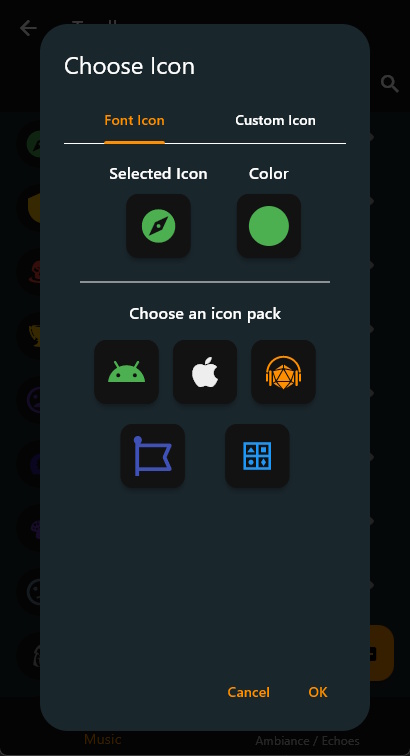
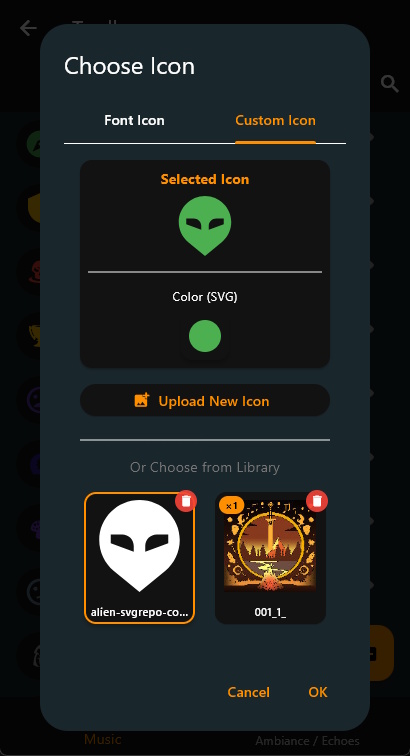
- Audio Forge: Deep customization at every level. Import any audio file (MP3, WAV, OGG, FLAC), assign custom names, colors, and icons (including your own PNG, JPG, or SVG images), and configure playback behavior per category (loop, shuffle, single play, pauses). Supports multiple independent sound libraries. In 2026, every visual and behavioral detail of your soundboard is yours to define.
- Pocket Bard: High-quality curated content, zero user file import. Customization is limited to working within their library’s structure.
- TableTone: Customization is built around its “adaptive audio” mixing approach. Not designed for granular file or category management.
- RPG Master Sounds Mixer: You can import your own files, but the concept of “categories” with configurable playback behavior simply does not exist here. Everything is a flat grid of sounds. There is no music layer, no ambiance layer, no fades — just buttons.
- SoundTale: Feature set exists, but users consistently report that meaningful customization requires payment.
- Syrinscape: Pre-built soundsets with dynamic layers. Standard players offer very little granular control. Import is paywalled behind the SuperSyrin subscription tier.
- Tabletop Audio / Spotify / YouTube: Zero app-level customization. You use what they give you.
B. Sound Sourcing
- Audio Forge: Comes with a curated starter library ready to use on day one, plus professionally produced audio packs available as one-time purchases or via subscription — so you never need to touch Freesound or import a single file if you do not want to. When you are ready for more, you can also import your own files, record in-app, and search Freesound without leaving the app. It is the only option in this list that covers both ends: a managed content library and full open import.
- Pocket Bard: Self-produced library only, no external sourcing of any kind.
- TableTone: Ships with its own library. No import.
- RPG Master Sounds Mixer: Supports importing your own files. That is where the flexibility ends: no Freesound integration, no in-app recording, and no concept of mixing sources together dynamically.
- SoundTale: Library-based with purchasable packs. No user import.
- Syrinscape: The undisputed leader for officially licensed content. If you are running a specific Pathfinder Adventure Path or D&D module, Syrinscape likely has the exact soundscape for that room. No other app comes close for that use case. Import is paywalled: standard players have no user import; the SuperSyrin tier unlocks it.
- Tabletop Audio: Great free ambient tracks on the web. No import or library search features.
- Spotify / YouTube: Vast music libraries, no TTRPG tooling, no SFX, no integration.

C. Ease of Use and Workflow
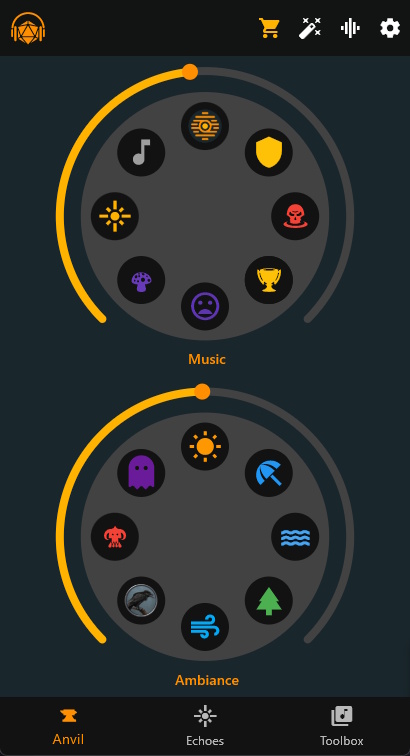
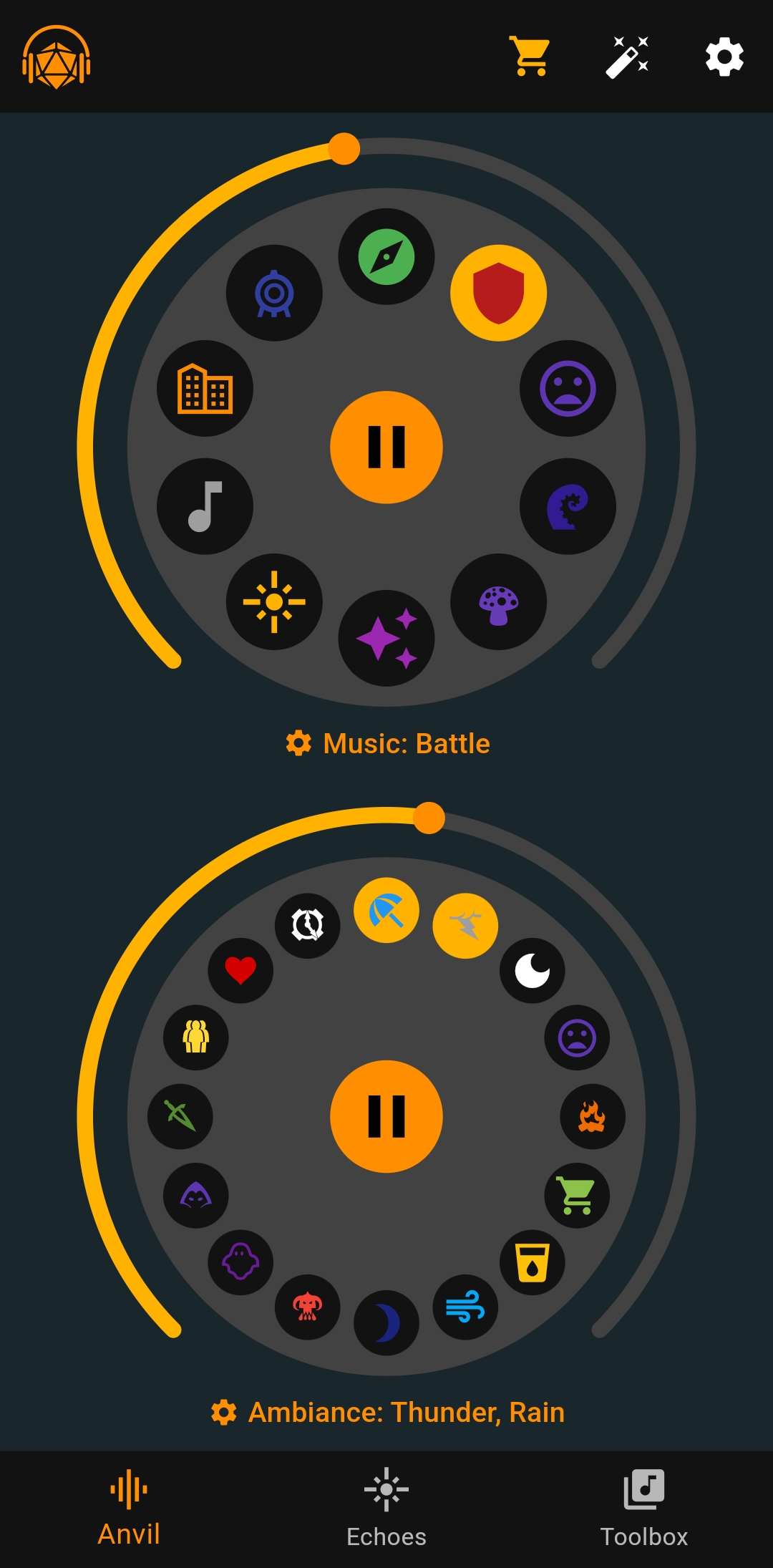
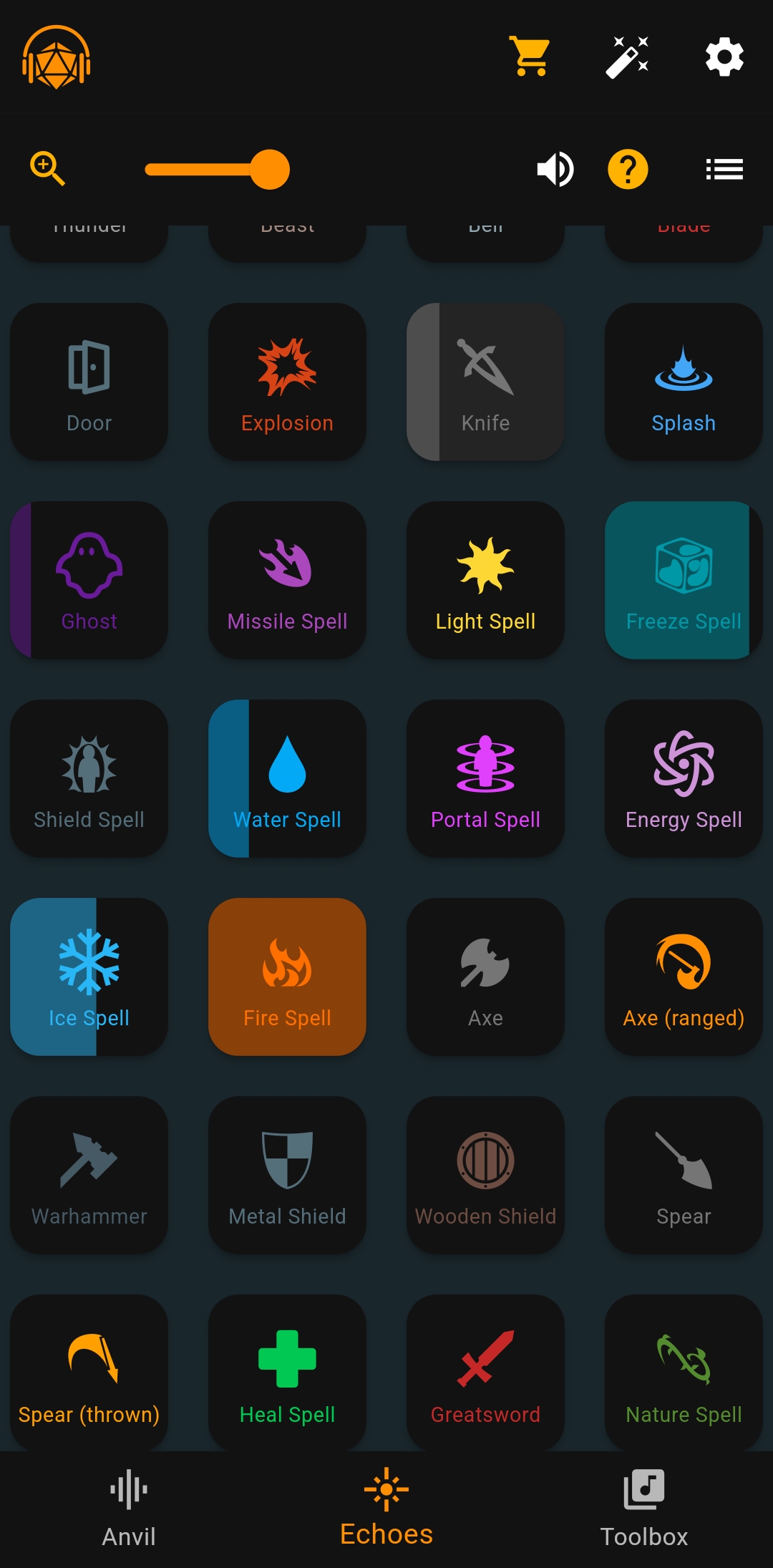
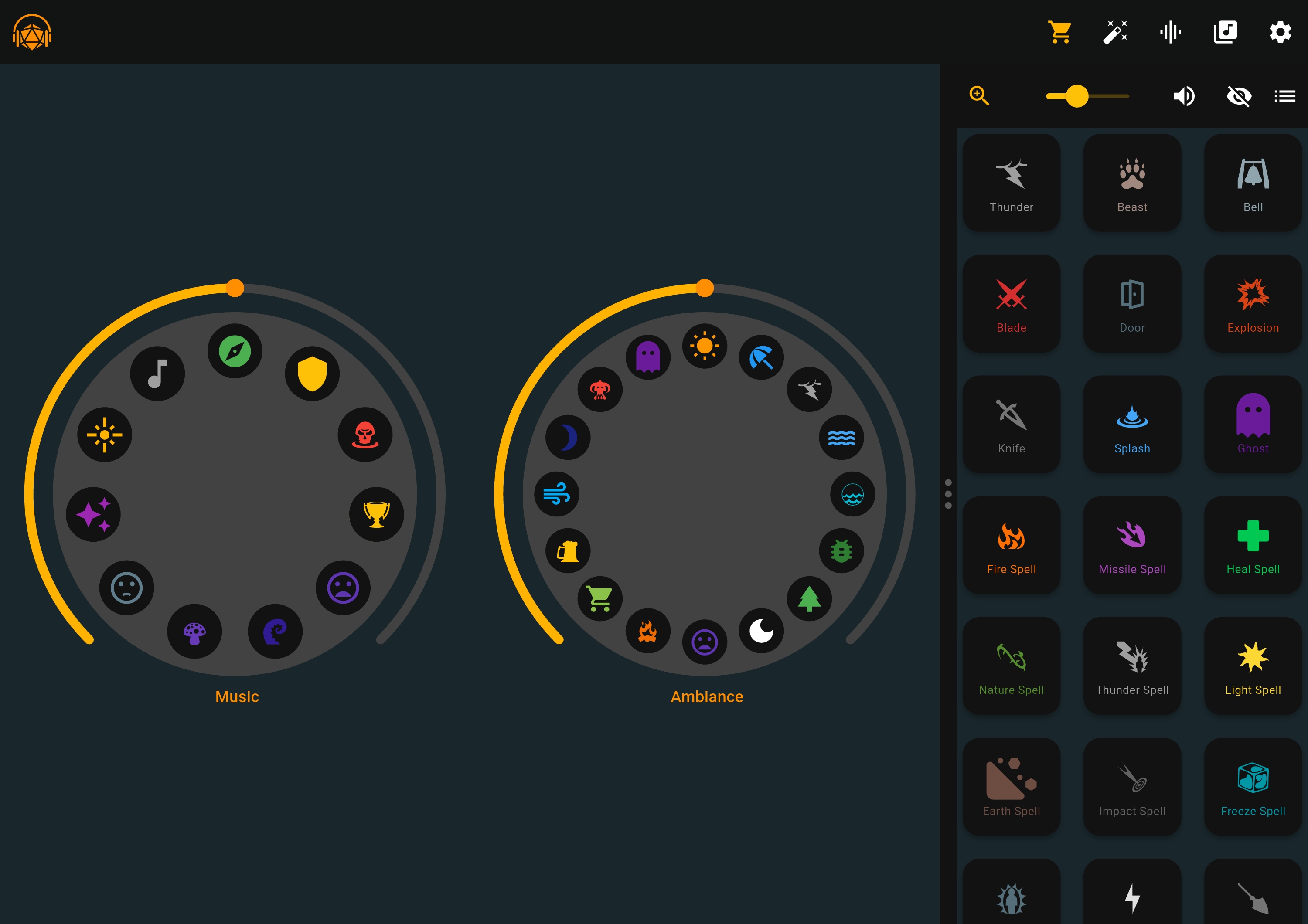
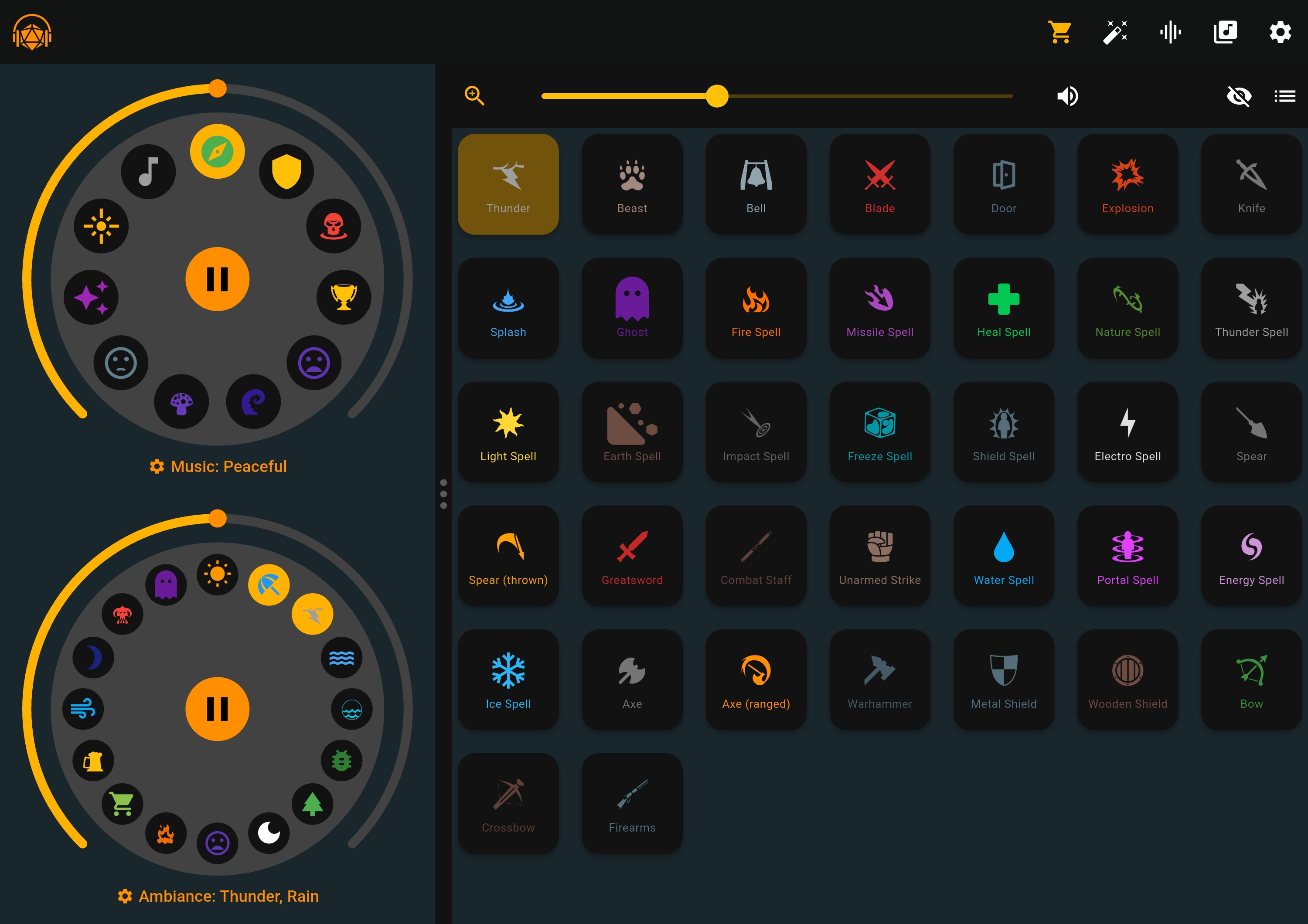
- Audio Forge: Opens with a ready-to-use starter library. You can run your first session without importing a single file or reading any documentation. The interface separates prep (Toolbox) from play (Anvil for music and ambiance, Echoes for one-shots), and on desktop, tablet, or iPad, the Unified View puts both panes side-by-side. The depth is there when you want it, but the default experience is: open, pick a sound, play. That combination of a low floor and a high ceiling is rare in this category.
- TableTone: Mobile-only for now (desktop planned but not available). The adaptive mixing model is interesting, but the interface can feel non-intuitive for traditional soundboard tasks. It does support presets and scenes for session prep.
- RPG Master Sounds Mixer: A legacy tool built around a flat sound-trigger model. It works for what it is, but it was not designed for the cinematic music-plus-ambiance workflow that modern TTRPG sessions increasingly expect. The interface reflects its age: dense layout, no separation between setup and live play, and volume management that requires manual attention mid-session. Available on Windows via the Microsoft Store.
- Pocket Bard: Polished mobile app with a Windows beta available. Optimized for browsing its own library.
- Syrinscape: Available on Windows, macOS, Linux, iOS, and Android. Polished but locked to its own content.
- SoundTale: Interface usability may suffer from frequent nudges to upgrade.
- Tabletop Audio: Simple browser tool, easy for its narrow purpose.
- Spotify / YouTube: Familiar but inefficient, requiring constant switching and no GM-specific controls.
D. Pricing
- Audio Forge: Core features are free forever, and that includes everything: import, record, Freesound search, full customization, State Links, MQTT, custom icons, ambiance ducking. If you want curated content without sourcing anything yourself, professionally produced audio packs are available as one-time purchases or via a single subscription that unlocks all current and future packs. You can go from zero to a full professional-sounding session without importing a single file. And if you want one pack, you buy one pack. No subscription required.
- Pocket Bard: Subscription-based for full library access. Free tier includes 17 locations.
- SoundTale: Free base app, but many features reportedly require a subscription.
- Syrinscape: 25 soundsets are available free with no account needed. Full library access requires a subscription, which can get expensive for the complete collection.
- TableTone: Generally free with subscription for premium content and features.
- RPG Master Sounds Mixer: Free with one-time in-app purchases for audio packs.
- Tabletop Audio: Very generously free, with Patreon extras. Not a full soundboard tool.
- Spotify / YouTube: Free tiers with ads, premium removes them. Not designed for TTRPG use.
E. Advanced Features
This is where 2026 Audio Forge pulls furthest ahead.
- Audio Forge:
- State Links save and restore your entire soundscape with a sharable link.
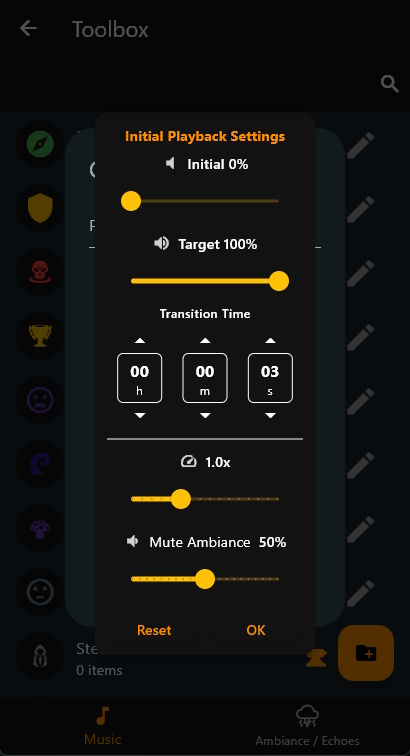
- Ambiance Ducking (new in 1.4.9): each music category can automatically reduce ambiance volume while it plays, then restore it cleanly when music stops. Set it once per category, forget about it mid-session.
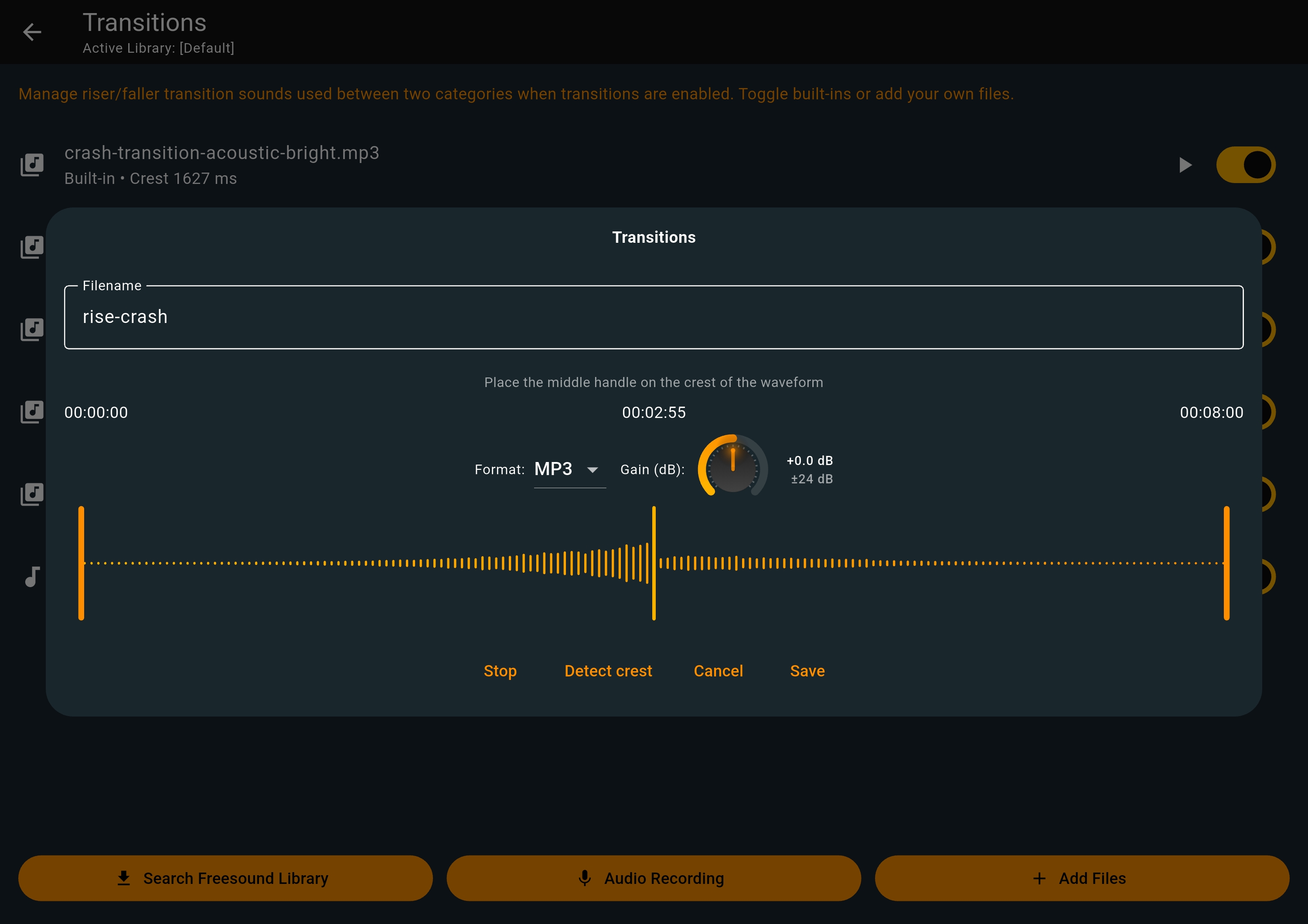
- Custom Epic Transitions (new in 1.4.0): choose or upload your own transition sounds, trim and adjust gain in-app, and let automatic waveform crest detection time the category switch to the peak of the effect.
- MQTT / Home Assistant integration (new in 1.4.4): publish Audio Forge state and receive commands from any MQTT-compatible tool. Control music and ambiance from Home Assistant automations, Stream Deck buttons, or anything that can send a message to a broker. Fire your battle music and your table’s lights at the same time.
- Granular fade controls per category, global pause and resume, subset track selection.
- TableTone: “Adaptive audio” for mood/intensity shifting via tags, plus presets and scenes for session prep.
- Pocket Bard: Layered playback with vocals and intensity layers, within their own content only.
- Syrinscape: Dynamic soundsets with limited event-based reactivity within their system.
- SoundTale: Added a scene manager in version 2.0 with saveable sound wheel configurations.
- RPG Master: A flat trigger model by design. No fades, no layering system, no transitions, no scene saving.
- Others: Advanced features are limited or absent, especially in non-dedicated apps.
F. Why Does Layered Mixing Matter for TTRPGs?
This deserves its own section because it is where the apps diverge most significantly in practice.
A proper layered mixing system lets you have music and ambiance running simultaneously as independent layers, each with its own fade behavior, volume, and playback logic. When you switch scenes, music transitions smoothly while ambiance continues or crossfades. When a boss fight starts, epic music swells and ambiance automatically ducks. The result feels like a movie score, not someone pressing play on their phone.
- Audio Forge: The entire app is built around this model. The Anvil screen has separate Music and Ambiance category wheels. Every category has configurable fade-in and fade-out times. Ambiance Ducking (1.4.9) automatically lowers ambiance when music plays and restores it when music stops. Epic Transitions time their category switches to the peak of a sound effect. You can run a full cinematic audio experience without touching a single volume slider mid-session.
- Syrinscape / Pocket Bard: Layered playback exists within their soundsets and libraries, with music and ambiance elements designed to work together. The limitation is that you are working with their content, not your own.
- TableTone: The adaptive mixing approach handles mood and intensity in a different paradigm. Some layering is present.
- SoundTale: Basic mixing, details unclear beyond the scene manager.
- RPG Master: Built as a flat trigger grid, not a mixing system. You can play multiple sounds simultaneously, but there is no music layer vs. ambiance layer, no per-category fades, and no automation. It works as a classic sound trigger tool; it was simply not designed with cinematic session audio in mind.
What Changed for Audio Forge Between 2025 and 2026
The gap grew. In the twelve months since the last comparison, Audio Forge shipped:
- Unified View (1.4.0): desktop, tablet, and iPad users get a true split-screen layout with a draggable divider. Anvil and Echoes are always visible together.
- Custom Epic Transitions (1.4.0): every transition is now editable (trim, gain, Freesound download) with crest-timed switching for clean scene changes.
- MQTT / Home Assistant (1.4.4): a full integration layer that lets TTRPG audio talk to your smart home, stream tools, or any automation platform.
- Custom Category Icons (1.4.9): upload your own PNG, JPG, or SVG as a category icon. Exported libraries carry them along.
- Ambiance Ducking (1.4.9): configure per-music-category ducking so ambiance automatically steps back during dramatic moments and returns when music stops.
No competing app shipped a comparable feature in this period.
Who Should Use What
- The GM who just wants something that works tonight: Download Audio Forge, open it, and play sounds from the starter library. That is it. No import required, no setup, no reading the docs. It is arguably the simplest app in this list to get started with, and if you later want to go deeper, everything is there.
- The power user who owns their audio: If you have folders full of MP3s and want total control over how they are organized and played, Audio Forge was built for you. The free core covers everything, no subscription required.
- The “I just want it to sound good without doing any work”: Audio Forge has you covered too. The starter library is ready on first launch, and the audio packs are professionally produced and dead simple to activate. No imports, no Freesound hunting, no folder management. If you specifically want Syrinscape’s licensed module catalog, that is a legitimate reason to choose Syrinscape. Otherwise, do not assume Audio Forge requires DIY audio sourcing.
- The setup enthusiast / streamer: If your table has smart lighting, a fog machine, or a Stream Deck, Audio Forge with MQTT is the only option that connects everything together.
- The free ambient background seeker: If you just need some atmospheric tracks in a browser tab with zero setup, Tabletop Audio is great and free.
- The GM coming from RPG Master: RPG Master is a legitimate free tool for basic sound triggering. If you have outgrown the flat trigger model and want cinematic layering, proper fades, and a session-ready interface, Audio Forge is the natural next step.
Conclusion
The 2026 TTRPG soundboard landscape has one app that treats your audio as yours, one that charges for access to theirs, and several that split the difference in ways that mostly favor the developer.
Audio Forge combines a free core, full user audio import, multi-platform support, smart home integration, and automatic audio mixing. Every major feature added in 2025 and 2026 has been free for existing users.